The Iron Giant (1999)
Director: Brad Bird
Screenwriters: Tim McCanlies, Brad Bird
Starring: Eli Merienthal, Harry Connick Jr., Jennifer Aniston, Vin Diesel, Christopher McDonald, John Mahoney, Cloris Leachman, M. Emmet Walsh, James Gammon
Brad Bird’s feature directorial debut deserves to be mentioned alongside the great achievements in animation. Even after more than two decades of technological advances, The Iron Giant continues to inspire wonder and to deliver genuine emotional impact. Its story still resonates because of strong characters, thoughtful themes, and careful filmmaking.
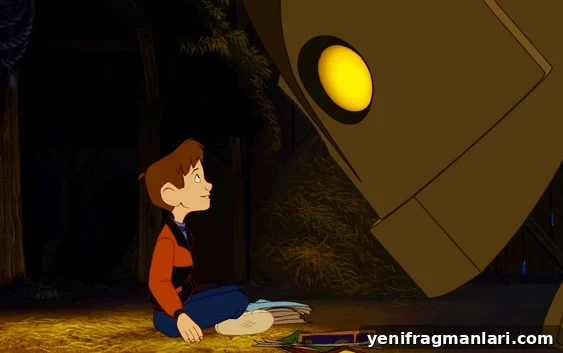
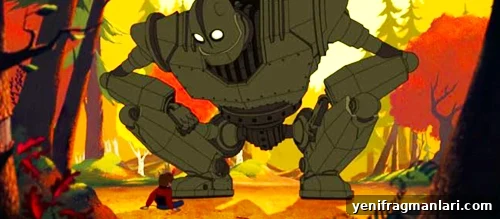
The film adapts the main beats of Ted Hughes’s 1968 novel “The Iron Man” while deepening the story by moving it to a 1950s small-town American setting. The narrative follows lonely nine-year-old Hogarth Hughes (Eli Merienthal), an imaginative boy who longs for a real companion. When something mysterious crashes off the coast near his Maine town, Hogarth discovers it is a giant robot (voiced in key moments by Vin Diesel). As Hogarth befriends the machine, their relationship draws the attention of an unsettling government agent (Christopher McDonald), setting up a conflict that explores trust, innocence, and fear.
In the 1990s, Bird encountered resistance within the industry; studios doubted the financial viability of non-Disney animated features. Despite that, Bird and a dedicated team at Warner Bros. created a film that challenged expectations. Warner Bros. animation, best known for television successes, took a risk by attempting to compete with established feature animation houses, working with a mix of veteran and underused talent and operating with a tighter budget than many competing projects.
The movie’s production context makes its achievement more remarkable. At the time, major studios like Disney and emerging competitors were drawing much of the animation talent, yet Warner Bros. managed to assemble a team capable of delivering a distinctive, heartfelt film. The result is a movie that feels personal and crafted rather than formulaic.
The Iron Giant maintains a particularly strong bond with viewers who grew up with it, but it also connects with new audiences because its themes are timeless. The film’s central moral conflict — a powerful weapon choosing a different purpose, captured by the Giant’s simple declaration, “I am not a gun” — gains emotional force from both its period setting and from Brad Bird’s own personal experiences that informed the film’s creation. Bird has explained that the idea of a being choosing not to be a weapon was a driving concept behind the story.
The film opens with a striking reveal: the Giant first appears in a storm, his presence mistaken for a lighthouse before he turns his searchlight-like eyes toward a fishing boat. This moment establishes scale and mystery immediately. Hogarth’s instinctive empathy, shown when he helps the malfunctioning machine rather than fears it, defines the humane core of the story.
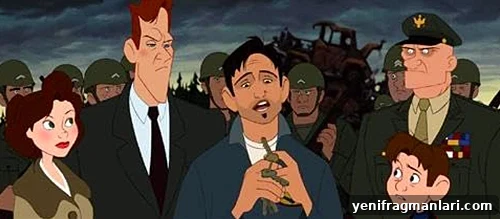
The influence of 1950s science-fiction B-movies and the era’s Cold War paranoia is woven throughout the film. Though it could easily have been rendered in grainy black-and-white, Bird and his artists instead reference the genre through mood, composition, and playful nods to late-night sci-fi movies that Hogarth watches on television. Setting the story in an era of fear and suspicion heightens the film’s exploration of humanity’s darker impulses and the loss of innocence.
Composer Michael Kamen’s score is an essential component of the film’s emotional resonance. His sensitive orchestration complements the film’s quieter, more reflective moments and elevates key scenes without overpowering them. The music, combined with carefully written dialogue, amplifies the film’s emotional impact.
The voice cast is excellent across the board. Eli Marienthal anchors the film with a tender, believable performance as Hogarth Hughes. Vin Diesel gives the Giant a few brief but memorable vocal moments that convey innocence and wonder. Jennifer Aniston turns in a strong performance as Annie, Hogarth’s single mother, bringing warmth and exasperation in equal measure. Harry Connick Jr. provides charm and comic timing as Dean, the laconic scrap man, and Christopher McDonald is effective as Kent Mansley, the officious government agent whose paranoia drives much of the external conflict.
Technically, the film blends traditional hand-drawn animation with computer-generated elements, most notably the Giant himself. While the CG doesn’t always perfectly integrate with the hand-drawn environments, the animators inject energy and personality into every sequence, and Brad Bird’s belief that animated characters can convey the same subtlety as live actors is evident throughout. Small behavioral details and background gags reward attentive viewers.
To regard The Iron Giant as merely a children’s movie is to miss its depth. It strikes a careful balance between lightheartedness and darkness, sincerity and satire, accessibility and moral complexity. Brad Bird’s storytelling invites the audience to care deeply for the characters and to consider a universal lesson about choice and compassion. That enduring quality explains why audiences return to the film and why new viewers continue to discover it years after its release. The Iron Giant stands as an underdog of animation that proved its worth and has truly stood the test of time.
Score: 23/24
Rating: 5 out of 5.