
The Old Oak (2023)
Director: Ken Loach
Screenwriter: Paul Laverty
Starring: Dave Turner, Ebla Mari, Claire Rodgerson, Trevor Fox, Chris McGlade, Col Tait, Jordan Louis, Chrissie Robinson, Chris Gotts, Jen Patterson, Arthur Oxley, Joe Armstrong, Andy Dawson, Maxie Peters
“There’s no shame in love.” That simple line resonates throughout The Old Oak, a film that returns Ken Loach to his signature territory: intimate, humane social realism made with compassion and sharp moral clarity. At 87, Loach has delivered what many regard as a fitting capstone to a career defined by stories of ordinary people struggling against economic and social forces beyond their control.
Written by Paul Laverty, Loach’s long-time collaborator, the film is set in an unnamed North East British town where a local pub, The Old Oak, becomes the focal point for a merging of communities: local residents and newly arrived Syrian refugees. The film uses this meeting to explore themes of belonging, dignity, and shared hardship, drawing clear emotional parallels with Britain’s industrial past—most notably the mining communities that faced devastation in the 1980s. Those echoes give the story both historical depth and contemporary urgency.
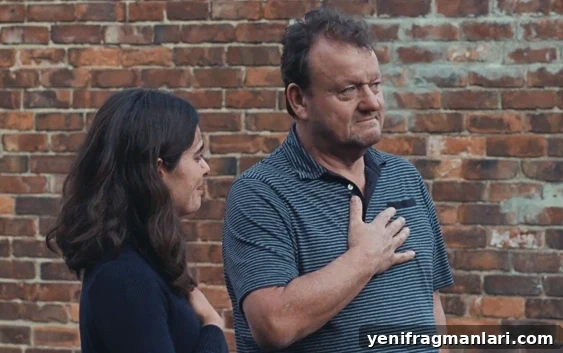
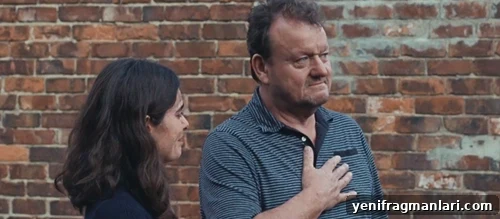
Cinematically, the film benefits from beautiful Kodak film stock, which lends a tactile, slightly weathered texture to the visuals—skin, smoke, rain, and worn brickwork feel immediate and real. That aesthetic choice aligns perfectly with the film’s concerns: it celebrates ordinary life, the act of seeing, and the work of bearing witness. One character’s interest in photography becomes a fitting motif for a film about looking closely at communities that are often ignored.
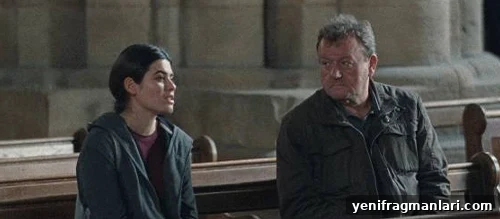
Performances are unshowy and naturalistic. Loach’s established skill for drawing out authentic work from non-professional actors remains a central strength, and many scenes gain power from moments that feel improvised or lived-in. The refugees are depicted with care and complexity, not as props but as people with histories, fears, and quiet resilience. Similarly, local characters are shown with all their contradictions—sometimes stubborn, sometimes kind—making the eventual moments of empathy feel earned rather than sentimental.
Beyond its craft, The Old Oak is a political film in the broadest sense: it insists on naming the social conditions that create division and suffering. The film criticizes a media and political culture that often scapegoats newcomers while avoiding scrutiny of the deeper structural problems—declining local services, inadequate housing, and economic policies that hollow out communities. Loach’s argument is straightforward: when people in the same town face similar struggles, solidarity matters more than fear mongering.
The film does not shy away from emotional weight. It combines sorrow with moments of warmth and humor, producing a tonal balance that many of Loach’s best films achieve—realistic without being relentlessly bleak. Some viewers might find the film’s hopefulness overly optimistic given the bleak realities it depicts; nonetheless, that hopefulness is part of its ethical stance. It’s a reminder that stories can both indict injustice and celebrate the small acts of care that sustain people day-to-day.
Context is important. The British film industry has changed dramatically in recent decades: funding structures, tax rules, and an increasing reliance on international co-productions have limited opportunities for locally rooted stories. Against that backdrop, Loach’s ability to realize a film focused on a neglected region and to secure national distribution is significant. It underscores both his stature and the wider cultural loss when such voices struggle to be heard.
Artistically accomplished and emotionally honest, The Old Oak stands as both a moving drama and a civic statement. It’s a film that seeks to broaden empathy and to challenge easy narratives about community and belonging. For viewers willing to listen, it offers an urgent reminder: people on the margins deserve to be seen and to have their stories told.
If any criticism can be offered, it is that the film’s central moral thrust may feel familiar to those who have followed Loach’s work for decades. Yet familiarity here does not mean redundancy—the director still carries a rare mastery of tone, character, and scene construction that keeps the film compelling from start to finish. Ultimately, The Old Oak will likely be remembered as another essential Loach film: modest in scale but vast in empathy and social conscience.
This is a film for anyone interested in cinema that engages with social reality without losing its human core. It’s about community, shared vulnerability, and the stubborn belief that love and solidarity can still make a difference in hard times. Ken Loach has delivered another film that speaks plainly and powerfully to those concerns.
Score: 23/24
Rating: 5 out of 5.