
Titanic (1997)
Director: James Cameron
Screenwriter: James Cameron
Starring: Kate Winslet, Leonardo DiCaprio, Billy Zane, Kathy Bates, Frances Fisher, Bernard Hill, Jonathan Hyde, Victor Garber, David Warner, Danny Nucci, Bill Paxton, Louis Abernathy, Gloria Stuart
In the internet era, public opinion can shift in an instant. Even before social media amplified every voice, cultural events inspired fierce debate and rapid reassessment. Few films illustrate this phenomenon better than James Cameron’s Titanic. Upon its December 1997 release, the movie arrived wrapped in myth: the most expensive film at the time, a protracted shoot and delayed premiere. Expectations were uncertain, and critics and audiences quickly formed strong, opposing views.
When Titanic premiered, it became an immediate commercial phenomenon. Audiences returned week after week, and the film ultimately became the first to gross more than one billion dollars worldwide, a record it held until James Cameron’s Avatar eclipsed it in 2009. At the 70th Academy Awards Titanic received 14 nominations and won 11 Oscars, including Best Picture. Its end-credits song, “My Heart Will Go On” by Celine Dion, became one of the best-selling singles of its era.
Despite box office success and initial praise, Titanic had—and still has—detractors. Some dismissed it as a “chick flick,” influenced by Leonardo DiCaprio’s early-career appeal to younger fans. Others criticized its dialogue or its depiction of some antagonists as broad caricatures. Even professional reviews shifted: publications reassessed ratings and prominent critics offered strongly divergent opinions, from lauding the film as a sweeping spectacle to calling it excessive. The varied reactions underscore how Titanic has provoked intense, often contradictory responses over decades.
Viewed from the present, when studios are more risk-averse and corporate decisions frequently steer mainstream filmmaking, Titanic can feel even more remarkable. It stands as an example of large-scale filmmaking that married ambitious storytelling with technical innovation. The film remains a significant cinematic achievement because it balances spectacle and intimacy; it is ambitious without losing its emotional core.
James Cameron opens his three-hour drama in 1997 with shark-like curiosity: treasure hunter Brock Lovett (Bill Paxton) explores the wreck of the RMS Titanic. What begins as a modern salvage mission becomes a gateway to the past when Lovett’s team recovers a sketch of a young woman wearing a blue diamond known as the Heart of the Ocean. That sketch prompts elderly Rose Dawson Calvert (Gloria Stuart) to contact Lovett and recount her experience aboard the ship in 1912. Her memories transport the audience into the past and provide the emotional anchor that transforms archival detail into lived experience.

Cameron’s immersion in the historical tragedy is evident throughout the film. Production design, costumes, and set pieces are rendered with obsessive care, creating a tactile sense of the ship and its world. While not every detail is strictly historical, the film’s fidelity to texture and atmosphere makes the sinking feel immediate and human. Costume and makeup work stand out: characters look lived-in and vividly present, from the lavish finery of first class to the practical attire of steerage passengers.
But Cameron’s attention to detail serves a deeper purpose than mere authenticity. Titanic examines the distance between knowledge and experience. Lovett’s clinical approach to the wreck—measuring, modeling and reducing the disaster to objects—contrasts with Rose’s firsthand, emotional recollection. The director deliberately juxtaposes the sterile, reconstructive elements of modern archaeology with the messy, heartbreaking reality of human loss. The sinking scenes are spectacular and technically impressive, yet they retain dignity and avoid feeling exploitative; the horror matters because the film has taken time to make us care about its characters.
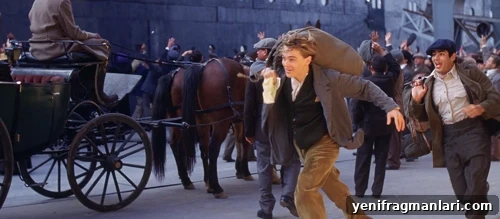
The movie sustains tension and urgency across its runtime. Cameron paces the story methodically, building character and atmosphere so the eventual catastrophe lands with the full force of accumulated empathy. Early sequences brim with hope and possibility: Rose (Kate Winslet), constrained by society and an arranged marriage to the arrogant Cal Hockley (Billy Zane), longs for escape; Jack Dawson (Leonardo DiCaprio), a free-spirited artist, arrives in steerage with dreams of a new life. James Horner’s score amplifies these moments with a melodic warmth that has become inseparable from the film’s emotional register.
When the iceberg strikes, the film’s careful groundwork makes the disaster devastating. Cameron gives weight to the ship’s collapse by showing its splendor and the social distinctions aboard, then stripping those comforts away as panic spreads. The ship’s designer, Mr. Thomas Andrews (Victor Garber), delivers a quiet, heartbreaking assessment of the situation that highlights the hubris of those who believed Titanic unsinkable. The film frames the sinking as a human-made catastrophe, intensified by a false sense of invulnerability.
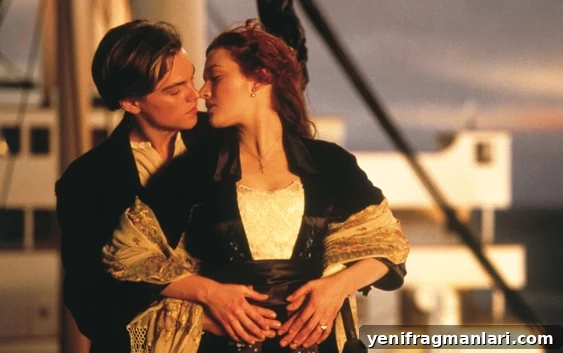
At its core Titanic endures because of its love story. The romance between Jack and Rose is unabashedly melodramatic, and that emotional directness is integral to the film’s impact. Winslet and DiCaprio create a believable bond: their chemistry convinces us that these two people would risk everything for each other. Scenes of sacrifice and devotion—such as Rose’s return to Jack in a moment of crisis—tap into universal feelings of loyalty and love. While supporting performances enrich the world around them, the film ultimately belongs to Rose’s transformation from a trapped socialite into a resilient survivor.
Technically, Titanic was groundbreaking. Cameron blended practical effects, large-scale water work, miniatures and compositing in ways that felt new and immersive in 1997 and still hold up today. The craftsmanship across departments—visual effects, set construction, cinematography—helped the film achieve a sense of scale and realism that elevates the narrative.
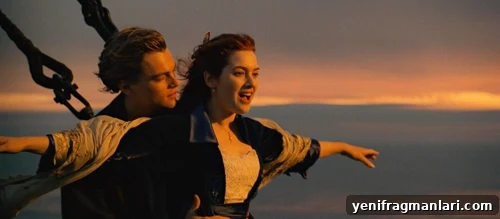
Though the industry and audience attitudes have changed since 1997, Titanic’s cultural imprint remains unmistakable. It embedded itself in popular culture through memorable images and moments—the “King of the World” proclamation, the handprint on the steamed car window, and countless homages and parodies across film and television. Whether viewed as a disaster film, a sweeping romance, or a historical epic, Titanic continues to move viewers. It proves that a movie can be grand in scale and intimate in feeling, and that the best blockbusters can also be deeply human.
Score: 24/24
Rating: 5 out of 5.