
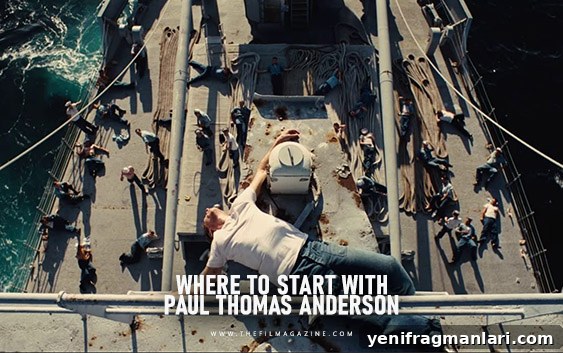
Paul Thomas Anderson is widely regarded as one of the finest filmmakers of his generation. His films reflect a cinephile’s sensibility: long takes, meticulous production design, and carefully curated scores and soundtracks. Those formal elements often transport viewers through specific times and places, but what elevates Anderson’s work is his willingness to probe fundamental questions about human existence. Who are we? Is there something greater than ourselves? Can people truly change? His films explore what it means to be human—how we behave in our brightest and darkest moments—with a seriousness that is never humorless. They balance entertainment, suspense, and depth, privileging character above all and presenting moral and psychological dualities without prescribing simple answers.
Like many auteurs, Anderson is also known for his recurring collaborators. Joaquin Phoenix, Daniel Day-Lewis, and Philip Seymour Hoffman have delivered some of their most acclaimed work under his direction. Actors not typically associated with dramatic roles—such as Mark Wahlberg, Adam Sandler, and John C. Reilly—have also produced striking performances when guided by Anderson. His ability to cast well and coax fully realized performances from his actors is one of his greatest strengths in an industry that often centers star power.
With the exception of his debut, Hard Eight, and the Adam Sandler-led Punch-Drunk Love, most of Anderson’s films have attracted awards attention. He has earned Best Director recognition at major film festivals: Cannes for Punch-Drunk Love, Berlin for There Will Be Blood, and Venice for The Master. Magnolia won the Golden Bear for Best Film at the Berlin International Film Festival. This critical and industry recognition places Anderson among a small group of contemporary filmmakers who consistently reach the highest levels of acclaim.
If you’re new to Anderson’s work, it can be hard to know where to start. Below is a concise guide highlighting three essential films that showcase the director’s range, themes, and strengths.
1. Boogie Nights (1997)
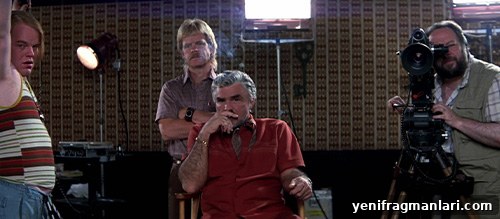
Paul Thomas Anderson’s breakthrough centers on the porn industry in 1970s Los Angeles. Mark Wahlberg leads an ensemble cast that includes Julianne Moore, Burt Reynolds, Heather Graham, John C. Reilly, Don Cheadle, Philip Seymour Hoffman, and William H. Macy. Burt Reynolds plays Jack Horner, a filmmaker who believes he’s making meaningful work, while Wahlberg’s Dirk Diggler rises quickly through Horner’s circle and the industry at large. Boogie Nights is ultimately an American dream story—about sudden success, the allure of wealth and fame, and the vices that accompany them. It mixes comedy and tragedy, and moves with a dynamic pace that keeps its expansive cast engaging and emotionally resonant.
The film is also a love letter to filmmaking itself. Anderson’s camera lingers on 1970s film equipment, Polaroid flashes, film canisters, and on-set technology, underscoring how cinema shapes and records human lives. The emergence of videotape and its impact on image quality and distribution is woven into the story, turning tools of the trade into subtle characters in their own right. By humanizing people who are often objectified, Anderson invites viewers to see the complexity beneath the industry’s surface. Boogie Nights stands as a strong example of Anderson’s early voice: empathetic, observant, and dispassionately curious about humanity.
2. There Will Be Blood (2007)
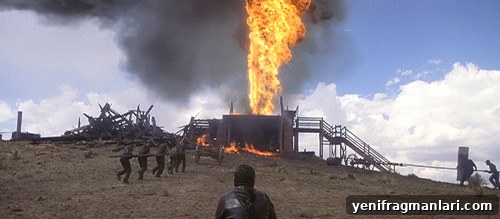
Often cited as Anderson’s masterpiece, There Will Be Blood follows oilman Daniel Plainview and his escalating rivalry with preacher Eli Sunday. Daniel Day-Lewis gives one of the landmark performances of his career as Plainview: dark, complex, and magnetically brutal. Paul Dano matches him with a ferocious turn as Eli, and their confrontations form the film’s emotional core. The movie’s tactile aesthetic—burning flames, slick crude oil, the dry heat of the landscape—creates a sensory immediacy that amplifies the story’s moral and psychological stakes.
Stylistically, the film evokes the grandeur of classic epics while remaining intensely focused on its characters. Anderson’s deliberate pacing lets the drama accumulate, making every image and silence count. The film treats realism as one of its tools rather than its sole aim, allowing formal choices in sound, camera, and editing to heighten emotion and symbolism. The result is a sprawling, unforgiving portrait of ambition, faith, and isolation—one of the most powerful American films of the 21st century.
3. The Master (2012)
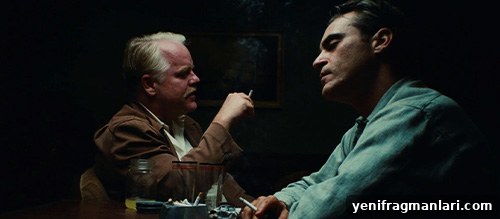
At the center of The Master are two extraordinary lead performances from Joaquin Phoenix and Philip Seymour Hoffman, playing Freddie Quell and Lancaster Dodd. Freddie is a volatile, damaged World War II veteran drifting through postwar America; Dodd is a charismatic and domineering leader of a movement called The Cause. Their relationship is magnetic and unpredictable: Dodd is fascinated by Freddie’s rawness, while Freddie oscillates between dependency and rebellion. The film studies power, vulnerability, and the porous line between leader and follower.
The Master resists tidy interpretation. Critics and audiences have read the film as commentary on religion, postwar American identity, and the rise of cults, but Anderson leaves much ambiguous—intentionally so. The film operates like a Rorschach test, inviting individual reflection rather than delivering a single message. It asks whether humans can rise above their base instincts, and whether attempts at spiritual or psychological reinvention are genuine or performative. If you’re drawn to character-driven, interpretive cinema, The Master is essential viewing.
Paul Thomas Anderson’s filmography now includes nine feature films, any of which could reasonably be a starting point. Titles such as Phantom Thread and Punch-Drunk Love offer different flavors of his artistry—more intimate, restrained, or formally playful—and are worth exploring after the three films outlined here. Anderson’s work rewards repeated viewings, revealing new thematic textures and formal pleasures each time.