Titane (2021)
Director: Julia Ducournau
Screenwriter: Julia Ducournau
Starring: Agathe Rousselle, Vincent Lindon, Garance Marillier, Myriem Akheddiou, Bertrand Bonello
Before its Cannes premiere and eventual Palme d’Or win in 2021, Julia Ducournau’s second feature, Titane, arrived surrounded by mystery. The initial synopsis released to the press was simply the definition of titanium—the English translation of the original French title—described clinically as “a metal highly resistant to heat and corrosion, with high tensile strength alloys.” That cryptic approach suited the film: Titane resists simple description and deliberately unsettles expectations.
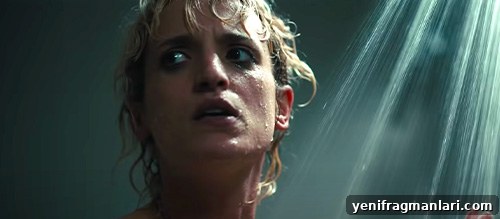
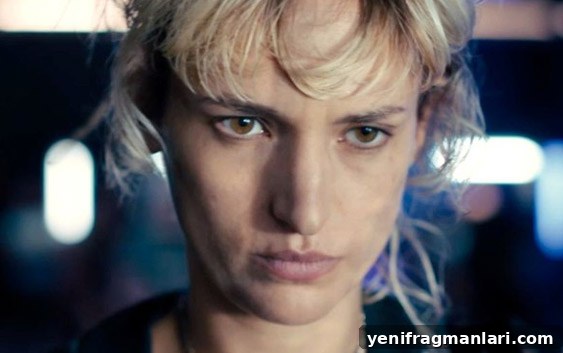
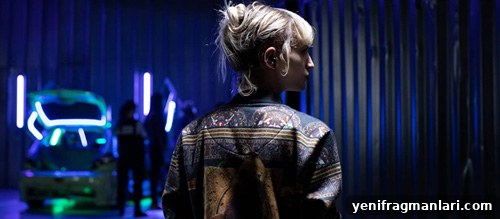
To offer a very general outline without spoiling the film’s many surprises: Titane follows Alexia (a mesmerizing breakout turn from Agathe Rousselle), an exotic dancer with an objectophilia and a titanium plate in her skull after a childhood car accident. A series of violent events forces Alexia into flight, and then into an unlikely and intensely strange relationship with Vincent (Vincent Lindon), a grieving middle-aged firefighter. Beyond that bare-bones summary there are plot developments that are best experienced in the moment; the film’s power relies heavily on its shocks and revelations.
Five years earlier Ducournau made her debut with Raw, a singular cannibal coming-of-age film that showcased her appetite for visceral, emotional storytelling. Garance Marillier, the star of Raw, appears here in a supporting role. If Raw felt intimate and quietly horrific, Titane is its ramped-up, turbocharged successor: bigger, louder, and more adventurous in both imagery and tone.
Ducournau has openly cited David Cronenberg as an influence, and elements of Cronenberg’s work are woven through Titane. Crash and Videodrome are obvious reference points in the film’s fascination with cars, technology, and bodily transformation, but Ducournau’s vision also echoes other body-horror filmmakers, channeling a relentless curiosity about the relationship between flesh and machine. The film challenges rigid notions about gender, identity, and the physical self, and it contains scenes in which human bodies are broken down, reshaped, and fused with technology in ways that are deliberately uncomfortable and provocative.
The director has also described a recurring nightmare about cars that helped inspire key sequences and the film’s finale. The imagery throughout Titane is startling and often grotesque: painful hair accessory accidents, shocking body modifications, self-imposed and coerced transformations, and frequent, unsettling juxtapositions of biological flesh and mechanical objects. These moments are not simply shock for shock’s sake; they serve Ducournau’s larger thematic interests around desire, trauma, and rebirth.
Tonally, Titane slips between horror, dark comedy, and dysfunctional family drama. It’s a film that, at times, plays like a very twisted domestic tragedy—one that might make even other contemporary social critiques look tame by comparison. Alexia’s relationship with her distant father (played by Bertrand Bonello) is damaged and fraught, rooted in the aftermath of the car accident. Most of her other connections are brief and toxic, which reinforces the film’s melancholic core: a search for understanding and belonging amid physical and emotional rupture.
There are moments of intense action in Titane, including an early long-take sequence of brutal force that is relentlessly kinetic. These set pieces are balanced against quieter, more emotionally raw scenes. At its best the film unites extreme imagery with a persistent emotional logic, creating a disconcerting but affecting experience.
One of the film’s strengths is how many themes it packs into its runtime without ever feeling merely academic. Titane probes contemporary anxieties about our dependence on technology, our obsession with youth and physical appearance, the gaping divides between generations, and the bewildering ways people process grief and trauma. These themes intertwine organically with the story, providing a psychological and cultural frame for the film’s more sensational elements.
Agathe Rousselle’s performance is a revelation. She commits fully to the role, conveying Alexia’s complex interior life with a piercing, steady gaze that anchors a character constantly undergoing transformation. Vincent Lindon complements her with a layered, affecting performance as the grieving firefighter who becomes entwined with Alexia. His character is full of contradictions: brutal and tender, scarred and yearning, a figure of slow-burning compassion.
There is a line in the film that lingers long after the credits: “You’re my son, you’ll always be my son, whoever you are.” Out of context it can sound cryptic, but within the film it embodies Ducournau’s brand of emotion—earnest, unconditional, and often strangely tender. That mixture of affection and oddness is at the heart of what makes her work so distinctive.
With Raw and Titane, Julia Ducournau has confirmed herself as an original auteur with both imagination and a darkly comic sensibility. Her films provoke a visceral reaction: one moment you may feel queasy, the next you may be surprised by catharsis or an unexpected laugh. Ducournau understands human contradiction—our bad choices, strange desires, and the wide range of impulses that define us—and she makes cinema that reflects those truths uncompromisingly.
See Titane on a large screen if you can. It is an experience designed to be felt as much as watched: unsettling, sometimes disturbing, but also strangely moving. You are unlikely to leave the theater unchanged.
23/24