

Embers (2023)
Director: Christian Cooke
Screenwriters: Dave Florez, Christian Cooke
Starring: Ruth Bradley, Christian Cooke, Clare Perkins, Samuel Anderson, David Wilmot
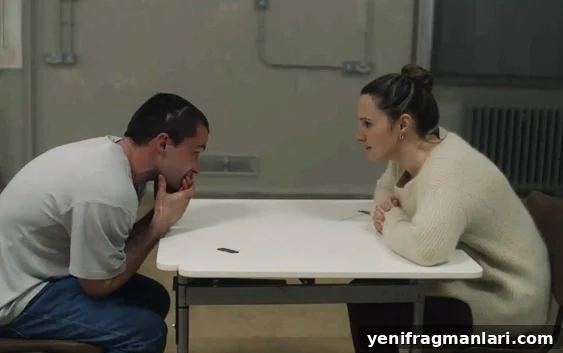
A film doesn’t have to be a conventional thriller to generate sustained tension. Embers is an independent social drama that manages to feel like a psychological fuse slowly burning toward ignition, creating a persistent sense of unease from its opening moments. The film centers on Amy (Ruth Bradley), an intimacy therapist who uses carefully managed physical contact as part of her therapeutic practice. Amy is asked by her director, Helen (Clare Perkins), to work with Dan (Christian Cooke), a 33-year-old patient who has been almost entirely silent for 18 years following a crime that left him institutionalised. The setup is inherently provocative and, in the hands of the filmmakers and actors, becomes a tense study of boundaries, ethics, and the human need to be understood.
The performances anchor the film. Ruth Bradley gives a nuanced portrayal of a therapist balancing compassion and professional limits, while Christian Cooke inhabits Dan with a layered restraint that keeps the audience guessing. Samuel Anderson, as Amy’s boyfriend Joe, adds an extra layer of emotional friction: their relationship provides a mirror to the moral and personal pressures Amy faces. The film cultivates an almost claustrophobic atmosphere by focusing on the interpersonal dynamics between these three characters, and by withholding certain details about Dan for much of the running time, the director prolongs the sense of potential danger and mystery.
Visually and sonically, Embers keeps the audience on edge. Sound design and the score — with its nervous, tremolo-like textures — work beneath the images to sustain an undercurrent of threat and anticipation. The film’s cinematography often isolates characters within tight frames, intensifying the feeling that something volatile could happen at any moment. Yet this tension is not merely for shock value; it serves the film’s broader interest in how society perceives and manages mental illness.
Beyond its surface suspense, Embers is a thoughtful critique of how mental health services operate under bureaucratic pressure. The film examines the consequences of forcing therapeutic processes into procedural boxes and timelines set by organisations that often lack understanding of complex psychological needs. Amy’s repeated attempts to reach Dan using different therapeutic approaches—sometimes innovative, sometimes awkward—illustrate both her commitment and the sheer unpredictability of human responses to trauma. The film highlights how deadlines and institutional imperatives can clash with the slow, non-linear reality of healing.

The narrative does lose a little momentum in its third act. Some choices and plot turns will read as familiar to an audience attuned to film conventions, and a few developments are foreseeable. That said, the screenplay seeds clues throughout the earlier acts that make these outcomes consistent with the characters’ emotional trajectories rather than arbitrary twists. Dan’s eventual revelations about his past and motivations are handled with sensitivity, and they challenge simplistic assumptions about people who’ve suffered severe trauma. These revelations shift the focus away from sensationalism toward understanding, showing how prejudice and misunderstanding can compound a person’s suffering.
One of the film’s strengths is the way it addresses the audience directly: it tries to “cure” our misconceptions as much as it attempts to reach Dan. By framing the story as an intimate, low-budget character study—few locations, a small core cast, and restrained production design—the film achieves a powerful intimacy. It demonstrates how a modest budget, when matched with precise performances and clear directorial intention, can deliver a lasting emotional impact. The restrained approach leaves space for viewers to sit with discomfort and to reconsider assumptions about therapy, responsibility, and human fallibility.
Ultimately, Embers is a compact, provocative drama that lingers after the credits. It’s not flawless—the final act falters slightly—but it succeeds as a portrait of damaged people attempting connection in a world of institutional pressures and personal fear. Its exploration of mental health, therapy ethics, and the messy realities of human relationships offers food for thought and invites conversation long after the screening ends.
Score: 19/24
⭐⭐⭐⭐
Rating: 4 out of 5.