
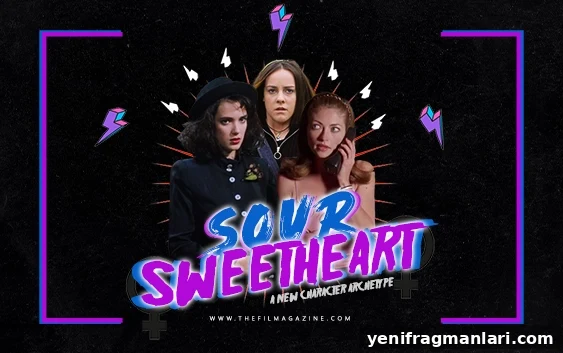

She keeps a diary and a gun. She’s beauty and composure, and she isn’t afraid to get a little blood on her Chanel lace. She’s a killer, a closeted lesbian, her high school’s very own Hester Prynne. She’s a newly recognized female film archetype: the Sour Sweetheart.
When thinking about female character tropes in film, names like the Girl Next Door, the Femme Fatale, the Damsel in Distress, the Manic Pixie Dream Girl, and the Final Girl likely come to mind. Thanks to countless 1980s coming-of-age films, the Girl Next Door reads as attractive and relatable—never too geeky, never so perfect as to be unattainable. The Femme Fatale, whose origins lie in 1940s noir, arrives dripping in bold lipstick, sultry dresses, cigarettes, and cocktails. The Damsel in Distress is the fragile, helpless maiden awaiting rescue. The Manic Pixie Dream Girl exists to teach a male protagonist to embrace life’s quirks. Each trope serves a predictable purpose—until new archetypes begin to shift expectations.
A meaningful change came with the Final Girl, largely associated with films like Halloween. The Final Girl reframed what a leading woman could be: not just beautiful, but the one fighting back, surviving, and rescuing others. She was smart and resourceful; she often wound up battered and bloody but alive. The Final Girl proved that complex, resilient female characters could be central to genre storytelling, and in doing so opened the door for other inventive female archetypes—among them, the Sour Sweetheart.
The Sour Sweetheart appears most often as a teenage protagonist in dark comedies. These films combine a campy, retro aesthetic with a bubblegum-pop sheen that masks a deeper, darker core. On the surface, both the characters and their worlds look feminine and familiar; underneath, they bristle with cruelty, violence, and moral ambiguity. The aesthetic balances cute and crude: candy, slushies, and lip gloss beside cigarette smoke, gunfire, and explosions. The constant contrast creates an uneasy tone that separates these stories from the hopeful, sentimental worlds occupied by Manic Pixie Dream Girls.
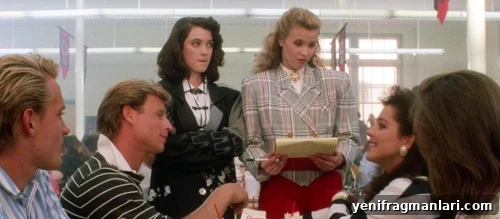
One of the earliest touchstones for the Sour Sweetheart is the 1988 film Heathers. Veronica Sawyer, played by Winona Ryder, initially looks like she could be a Final Girl, but the film is not horror—its tone, character arc, and dark humor place Veronica squarely in Sour Sweetheart territory. She belongs to a lineage of protagonists who are outwardly ordinary or even charming, yet capable of confronting shocking, violent circumstances while retaining an ironic distance and dry wit.
Audiences entering a film about teenage girls often expect romance, fashion, and emotional melodrama—and those elements are usually present in these films. Yet alongside glittering proms and polished outfits, Sour Sweetheart films deliver blood, violence, and social cruelty. Think of Jennifer’s Body, where Needy leaves prom to stab her monster-best-friend, or Jawbreaker, in which girls gush about a friend moments before an accidental killing. These protagonists may commit or be adjacent to horrific acts, but they lack the calculated seduction of the Femme Fatale. Instead, they fuse femininity and darkness in fresh ways.
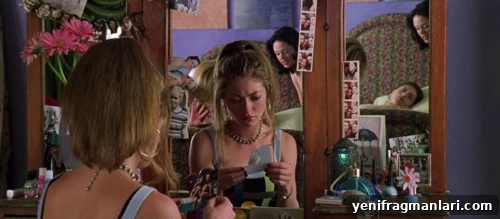
Unlike Femme Fatales, the Sour Sweetheart undergoes the most development in her story. She often wants to fit in and be “one of the girls,” yet she exists in gray space—neither wholly popular nor totally marginalized. Sometimes she even wins the accolades she chases, as Cady does in Mean Girls, but more often she’s admired without being fully understood. She’s sarcastic, impulsive, and quietly wise beyond her years—a teenager who often keeps her head down until circumstances push her into decisive action.
Her inner life is a core element of the trope. Films often use narration or close-up shots to place the audience inside her head, showing the contrast between how she sees herself and how she behaves in social settings. This introspective narration—from Olive’s vlogs in Easy A to Mary’s opening reflections in Saved!—reveals a thoughtful, observant protagonist whose public persona rarely captures her true complexity.
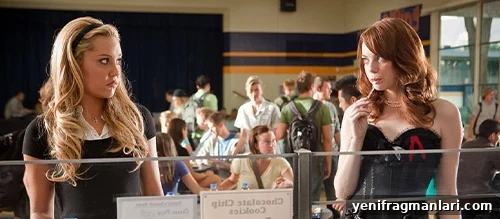
The Sour Sweetheart’s dialogue is often sardonic and dry, balancing cleverness with warmth. She can be cutting without losing empathy—calling someone “beautiful” with deadpan delivery rather than resorting to cruelty. Her humor fits the dark comedies she inhabits, and it rarely feels jarringly out of place. In another life, she might simply be the Girl Next Door; within her films, she is the Moon to her own story, guiding herself through shadowed terrain instead of illuminating a male protagonist’s journey.
Fashion also signals character: her clothes tend to be sensible but stylish, often reflecting a middle ground between extremes. In films like Heathers and Jawbreaker, shades of blue and carefully curated outfits convey both moral leaning and social positioning. Her wardrobe underscores a pragmatic personality—introspective, sensible, and quietly self-aware.
A recurring dynamic in Sour Sweetheart films is the female antagonist—charismatic, confident, and sometimes cruel. These antagonists often embody aspects of the Femme Fatale but remain deeply human: they struggle with body image, social pressures, and the way they are treated by boys. Their conflict with the Sour Sweetheart tends to be intimate rather than epic—verbal sparring, social manipulation, and one-on-one emotional warfare. The antagonist often provokes the Sour Sweetheart into growth, forcing her to confront who she is and what she will tolerate.

Importantly, these antagonists are rarely flat—they are written with motivations and vulnerabilities. Jennifer’s monstrous turn in Jennifer’s Body follows an act of violence against her; Heather Chandler and Regina George are cruel but also damaged. By the films’ ends, the Sour Sweetheart often arrives at a place of reluctant understanding: she recognizes the pain that fueled her adversaries even as she chooses not to remain entangled in their toxicity.
Romantic relationships in Sour Sweetheart films are usually secondary. Love interests exist, but they rarely drive the plot; they often admire the protagonist early on and serve to complement her arc rather than define it. Whether it’s Aaron Samuels in Mean Girls or Patrick in Saved!, these characters support rather than rescue. Sometimes the Sour Sweetheart loses a romantic partner—through death, betrayal, or choice—and uses that loss to refocus on a larger purpose, whether vengeance, survival, or self-realization.
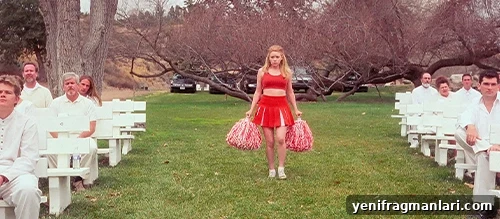
Where other tropes position women as needing salvation or romantic fulfillment, the Sour Sweetheart centers agency and self-discovery. She stops a boyfriend from detonating a school, saves her best friend, exposes the rot of social hierarchies, or simply learns to be herself. Her goals are personal and often moral: to find identity (Olive in Easy A), to escape indoctrination (Megan in But I’m a Cheerleader), to restore balance (Cady in Mean Girls or Mary in Saved!), or to survive and reckon with violence (Needy, Julie, Veronica).
The Sour Sweetheart is a layered, empowering trope—flawed and humane, sardonic yet compassionate, dangerous when pushed but essentially grounded in a moral center. She has quietly existed in dark comedies for decades, offering a different model of female protagonism: one where femininity and ferocity coexist, where growth is hard-won, and where love is a companion rather than the destination. Recognizing this archetype enriches how we understand female-led storytelling and highlights the kinds of women who have long inhabited our screens—complex, resilient, and unmistakably alive.
Written by Jessica Grassano