
Dial M For Murder (1954)
Director: Alfred Hitchcock
Screenwriter: Frederick Knott
Starring: Ray Milland, Grace Kelly, Robert Cummings, Anthony Dawson, John Williams
After plans to direct an adaptation of the 1948 novel The Bramble Bush did not materialize, Alfred Hitchcock returned to theatre-based material for his next film. He adapted Frederick Knott’s successful stage play Dial M For Murder for the screen, with Knott himself handling the screenplay. Several actors who originated roles on stage, including John Williams and Anthony Dawson, reprised their parts in the film, bringing continuity and familiarity to the performances. The story unfolds largely within a single apartment, relying on careful plotting and tightly controlled staging to sustain tension throughout.
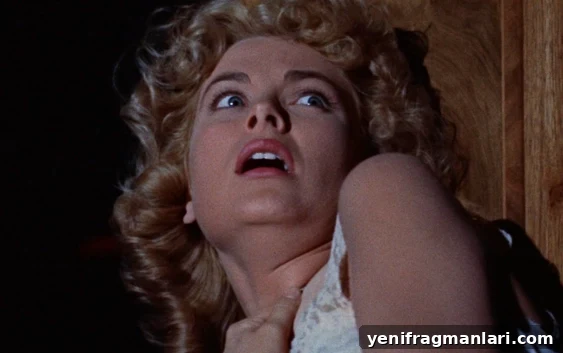
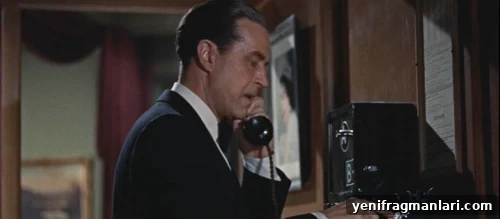
The plot centers on Tony Wendice (Ray Milland), a former professional tennis player who is married to Margot (Grace Kelly). Margot has been involved in an affair with writer Mark Halliday (Robert Cummings). Aware of the infidelity and desperate to protect his social standing, Tony engineers a plan to have Margot murdered. He coerces a former schoolmate into carrying out the crime while he attends a dinner as an alibi. The signal for the attack is simple: Tony will place a call to the apartment, and when Margot answers the telephone, the murderer will strike.
Dial M For Murder exhibits many hallmarks of Hitchcock’s work: psychological tension, voyeuristic undertones, an intricate thriller structure, and a love triangle at the story’s core. Yet the film is unusual among Hitchcock’s oeuvre because it preserves much of the play’s verbal complexity. Adapted directly from a stage play, the screenplay depends heavily on dialogue and explanation rather than the director’s customary visual-only storytelling. Despite this, Hitchcock applies his cinematic craftsmanship to make the conversations feel cinematic, using composition, camera movement, and editing to intensify the drama rather than let it stagnate on exposition.
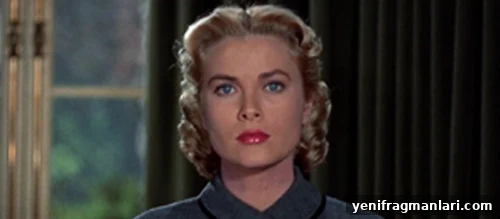
Grace Kelly’s performance as Margot is a standout. This role marked the first of three collaborations between Kelly and Hitchcock, and she brings an elegant yet vulnerable dignity to the character. Ray Milland’s Tony is quietly menacing—suave on the surface, calculating underneath—and Milland conveys the husband’s cruelty with restrained precision. Robert Cummings provides the affable, concerned lover, while the supporting cast adds credibility and texture to the narrow world of the apartment-set drama.
Hitchcock combats the potential stagebound feel of the material with inventive camera work and carefully planned staging. One memorable technique is a long, top-down “God’s-eye” shot used during the scene where the murder plan is explained. This perspective turns the apartment into a miniature map, transforming characters into pieces on a board and emphasizing the methodical, clinical nature of Tony’s scheme. Crosscutting intensifies the murder scene, alternating between Tony at his dinner and the apartment where the crime unfolds—an editing choice that amplifies suspense and demonstrates Hitchcock’s mastery of cinematic rhythm.
The film’s most iconic visual remains the image of Margot’s hand slipping away as the attacker tightens his grip—a simple but unforgettable moment that encapsulates the film’s ability to create lasting cinematic images from modest material. That murder sequence is executed with meticulous pacing and economy, proving Hitchcock’s skill at extracting drama even when his options are limited.
Dial M For Murder is not without flaws. The plot hinges on a string of mechanical details—keys, doors, and timing—that can feel contrived and require careful attention to follow. Because much of the exposition is delivered through dialogue, viewers may find the setup slow to build; the first act spends significant time outlining the plan and its contingencies. Still, once the story gains momentum, it delivers a taut, polished thriller that showcases Hitchcock’s command of suspense and staging.
Score: 19/24
⭐️⭐️⭐️
Rating: 3 out of 5.
Recommended reading: Top 10 Alfred Hitchcock Films (curated list)