
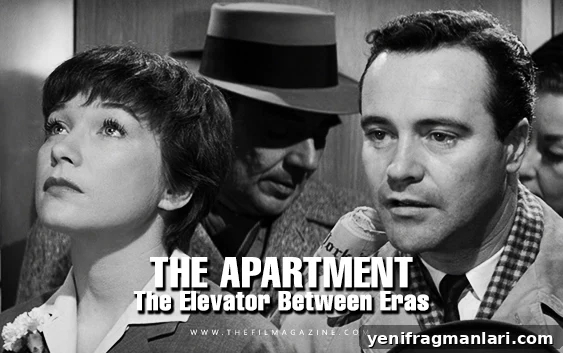
Winner of the Academy Award for Best Picture in 1961 and ranked number 54 in the British Film Institute’s Sight & Sound poll of the greatest films, The Apartment has remained prominent and widely discussed in the more than six decades since its release. Fresh off the contentious success of Some Like It Hot the year before, director Billy Wilder and his frequent collaborator I.A.L. Diamond revealed a different, more nuanced side of their talents in The Apartment. While that earlier film used broad comedy and cross-dressing gags to confront social mores, The Apartment blends sharp humor with deeper drama, letting Jack Lemmon, Shirley MacLaine, and Fred MacMurray show emotional range alongside comic timing. The result is a film that balances laughs with thoughtful commentary, told through the perspective of the earnest everyman, C.C. “Bud” Baxter.
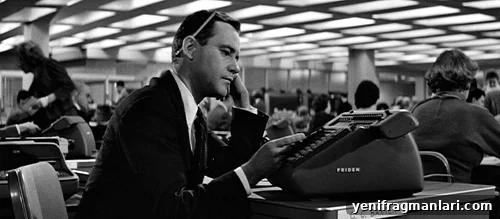
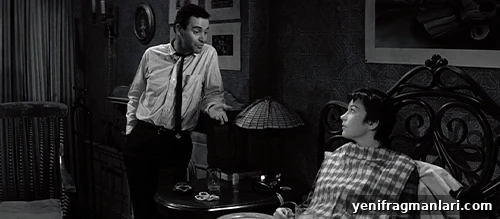
Baxter works in the Ordinary Policy Department of a massive insurance company whose headquarters employ more people than a small city. The story opens with a Classical Hollywood-style voiceover—an introduction that frames Baxter’s daily life before giving way to the film’s intimate, human moments. It is 1959, and though Baxter has been with the company for almost four years, he has risen through the ranks not by ambition alone but by offering a private service to certain executives: the use of his apartment for discreet trysts with their mistresses. This arrangement propels both the plot and the film’s exploration of compromise, loneliness, and ambition.
On the surface, The Apartment is a romantic comedy filled with winning comic performances and cleverly staged gags. Underneath that buoyant surface, however, it’s a thoughtful drama about moral compromise and the cost of climbing the corporate ladder. Wilder uses the trappings of mid-century office life and the arranged secrecy of Baxter’s apartment to critique a culture that asks people to sacrifice personal integrity and emotional connection in exchange for professional advancement.
Released at the turn of the 1960s, The Apartment arrived as an era in cinema and society was shifting. The Golden Age of Hollywood was coming to an end; television had become ubiquitous, suburbia was expanding, and the appetite for cinematic spectacle and traditional studio control was changing. Wilder stages a telling early scene in which Baxter sits before his television with a prepared TV dinner, eager to watch the classic film Grand Hotel on the small screen. Instead of uninterrupted viewing, he is forced to endure commercial interruptions that announce the feature and then delay it with ads. Frustrated, Baxter turns the set off—an image that subtly indicts commercialization and emphasizes how pervasive the pressures of consumerism and capitalism have become, even in the private spaces meant to sustain domestic life.
As the story progresses, Baxter’s disenchantment grows. He becomes increasingly disgusted with the men who use his apartment and with the personal compromises he has made to secure promotions. At the same time, Shirley MacLaine’s Fran Kubelik, the warm, conflicted elevator operator, undergoes her own awakening. The two characters move through disillusionment toward a more honest reckoning with their desires and limitations. Their reconnection, against the backdrop of New York City and its symbolic turning of the calendar, culminates in a hopeful but realistic resolution: what often matters most is human presence and fidelity, not the hollow lure of status.
The film concludes as the calendar flips to 1960—symbolically marking the end of old Hollywood conventions and the beginning of a new cinematic era. In the years that followed, cinema embraced color, challenged the strictures of the Hays Code, and experimented with freer forms of storytelling and independent financing. Films such as Bonnie and Clyde, The Graduate, In the Heat of the Night, Rosemary’s Baby, and Midnight Cowboy reflect that shift away from classical studio norms toward a bolder, more modern American cinema. The Apartment fits within this transition: it still uses familiar narrative techniques but pushes boundaries in tone and subject matter, signaling the industry’s changing priorities.
Earlier in his career, Wilder had also won Best Picture for Sunset Boulevard, another film that examines how characters become trapped—this time by fame and fading relevance rather than corporate ambition. Both films ask what happens to people when institutions and cultural expectations close in on them. In The Apartment, the confinement is less glamorous but no less suffocating: fluorescent-lit offices, anonymous corridors, and elevators that shuttle people between moral compromise and social ascent. Wilder’s insight is that aspiration itself can become a prison when it requires sacrificing meaningful relationships and personal dignity.
Critics at the time captured the film’s peculiar blend of charm and grit. The Saturday Review famously called The Apartment “a dirty fairy tale,” a phrase that points to its mix of romantic sentiment and unsparing realism. The film’s influence on romantic comedies that followed is evident, particularly in its climactic New Year’s Eve reunion—Fran running through the city to Baxter’s apartment—a sequence that balances urgency, hope, and human connection. Jack Lemmon himself called the story an examination of the “misuse of the American Dream,” an observation that remains resonant: the film interrogates how the promise of upward mobility can be distorted into a pursuit that leaves people emotionally depleted.
More than a period piece, The Apartment endures because its themes remain universal. It captures the tension between ambition and intimacy, the loneliness of urban life, and the small acts of kindness and fidelity that redeem ordinary people. In the film’s final moments, it suggests a simple but profound truth: success measured by status and position is hollow without companions who know us at our lowest and choose to stay. That human connection, not the dizzying rise to the top floor, is what ultimately matters.
By Kyra Lieberman
You can support Kyra Lieberman in the following places:
Portfolio: Kyra Lieberman
Blog: & More
X (Twitter): @kyralieberman
Instagram: @kyralieb